8 Important
Digital Marketing Topics

Content
- What is Digital Marketing?
- Importance of Digital Marketing
- Types of Digital Marketing
- Mistakes to Avoid
- Inbound & Outbound Marketing and Benefits :
- Traffic, leads & conversion
- Lead Generation & Benefits
- How Lead Generation Work?
What of Digital Marketing?
> Digital Marketing is a form of marketing that uses internet and electronic devices to reach an audience and potential customers for the promotion of brands. It is easy to measure with the help of analytics tools.
> It is the practice of promoting products, services or brands using digital channels such as search engines, websites, social media platforms, email and mobile applications. Unlike traditional marketing, digital marketing enables businesses to connect with their target audience online, measure campaign performance in real time, and optimize strategies for better results.
> As internet usage continues to grow, digital marketing has become an essential part of every successful business. Whether it’s a small local shop or a global company, organizations use digital marketing to increase brand awareness, generate leads, drive website traffic and boost sales.
> One of the biggest advantages of digital marketing is to target specific audiences based on factors such as age, location, interests and online behavior. This makes marketing campaigns more cost-effective and allows businesses to achieve better returns on investment.
Types of Digital Marketing?
Search Engine Optimization (SEO)
SEO improves a website’s visibility in search engine results. It helps attract organic traffic by optimizing content, keywords, website structure, and backlinks.
Pay-Per-Click (PPC)
PPC is a paid advertising model where businesses pay when someone clicks on their ad. It can generate targeted traffic and quick results through platforms like Google Ads.
Social Media Marketing
Social media marketing promotes a business through platforms such as Instagram, Facebook, LinkedIn, and X. It helps increase brand awareness, engagement, and customer relationships.
E-mail Marketing
Email marketing uses emails to communicate with customers and prospects. It can be used for promotions, newsletters, product updates, and customer retention.
Influencer Marketing
Influencer marketing involves collaborating with creators who have an engaged audience. Their recommendations can help brands increase awareness, trust, and reach.
Affiliate Marketing
Affiliate marketing allows individuals or businesses to promote products and earn a commission for successful referrals. It is commonly based on clicks, leads, or sales.
Video Marketing
Video marketing uses videos to promote products, services, or ideas. Platforms like YouTube, Instagram, and LinkedIn can help businesses reach and engage their target audience.
Content Marketing
Content marketing involves creating and sharing valuable, relevant content to attract and engage an audience. It helps build trust, increase traffic, and support conversions.
Importance of Digital Marketing?
Digital marketing is important because it helps businesses reach the right audience, build brand awareness, generate leads, and increase sales through online channels.
Key benefits:
- Wider Reach – Businesses can reach customers locally, nationally, or globally.
- Cost-Effective – Online marketing can be more affordable than traditional advertising.
- Targeted Marketing – Businesses can target people based on interests, location, age, behavior, and more.
- Measurable Results – Tools like Google Analytics and advertising platforms help track clicks, traffic, leads, and conversions.
- Better Customer Engagement – Social media, email, and other channels allow businesses to interact directly with customers.
- Higher Conversion Opportunities – SEO, paid ads, content marketing, and remarketing can guide users toward taking action.
- Builds Brand Awareness – Consistent online presence helps people recognize and trust a brand.
- Data-Driven Decisions – Businesses can use customer and campaign data to improve their marketing strategies.

Common Digital Marketing mistakes to avoid
Digital marketing can deliver excellent results when planned and executed correctly, but certain mistakes can reduce its effectiveness. One of the most common errors is launching campaigns without a clear strategy or defined goals. Without understanding the target audience, businesses often create content that fails to attract the right visitors or generate meaningful engagement.
Another mistake is ignoring search engine optimization, which can limit a website’s visibility in search results. Businesses also miss opportunities by publishing inconsistent content, neglecting mobile users, or failing to monitor campaign performance through analytics. These issues make it difficult to understand what is working and where improvements are needed.
Focusing only on gaining traffic instead of converting visitors into customers is another common challenge. A slow website, poor user experience, confusing navigation, or weak calls to action can prevent potential customers from taking the desired action. In addition, relying on a single marketing channel instead of using a balanced digital marketing strategy can limit overall growth.
To achieve long-term success, businesses should define clear objectives, understand their audience, create valuable content, optimize their website, monitor campaign performance regularly, and continuously improve their marketing strategies based on data and customer feedback
What is Inbound Marketing?
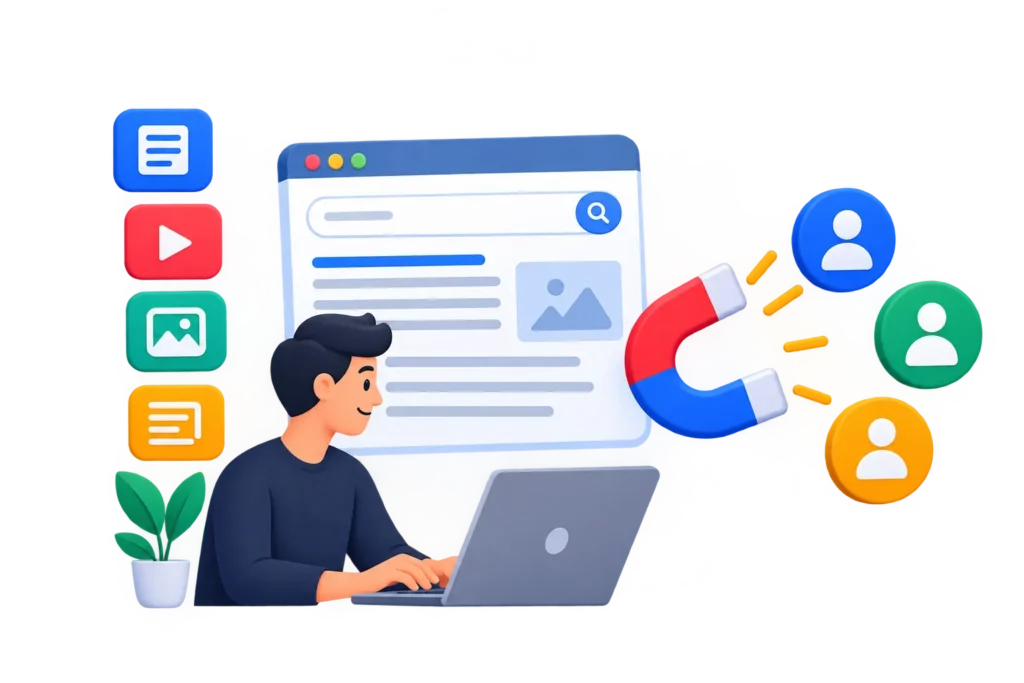
Inbound marketing is a strategy of attracting customers by creating valuable and relevant content that they actively want to discover.
Inbound marketing is a digital marketing strategy focused on attracting potential customers by providing valuable, relevant, and useful content. Instead of directly approaching people with promotional messages, businesses create content that helps their target audience solve problems, answer questions, or make better decisions.
The main idea behind inbound marketing is simple: attract customers rather than interrupt them.
For example, imagine someone wants to learn about SEO. They search Google for “What is SEO?” and find a useful blog post from a digital marketing company. After reading the article, they explore more content, subscribe to the company’s newsletter, and eventually contact the business for SEO services. This entire journey can be part of an inbound marketing strategy.

What is outbound Marketing?
Outbound marketing is a traditional marketing approach where a business actively sends promotional messages to potential customers, rather than waiting for them to discover the brand.
Outbound marketing is a marketing approach where businesses actively reach out to potential customers with promotional messages. Instead of waiting for customers to discover a brand through search engines or content, businesses take the message directly to their target audience.
The main goal of outbound marketing is to increase brand awareness, reach a large audience, generate leads, and promote products or services. It can be used through both traditional and digital marketing channels.
For example, when a company runs a television advertisement for a new product, the advertisement reaches people while they are watching TV, even if they were not actively searching for that product. This is a simple example of outbound marketing.
Benefit of Inbound Marketing
Inbound marketing focuses on attracting customers through valuable content and helpful experiences. Some of its major benefits include:
1. Attracts the Right Audience
Inbound marketing helps businesses reach people who are already interested in their products, services, or topics through SEO, content, social media, and other channels.
2. Builds Trust and Credibility
Providing useful and informative content helps businesses establish expertise and build trust with their audience over time.
3. Generates Organic Traffic
SEO and content marketing can bring consistent organic traffic to a website without paying for every visitor.
4. Generates Quality Leads
People who engage with a business’s content are often more interested in its products or services, which can lead to higher-quality leads.
5. Cost-Effective in the Long Term
A well-created blog, video, or other piece of content can continue attracting visitors and generating leads long after it is published.
6. Builds Long-Term Relationships
Inbound marketing focuses on educating and helping customers, which can improve engagement and encourage long-term relationships.
Benefit of Outbound Marketing
Outbound marketing helps businesses actively reach potential customers through promotional messages and advertising. Its major benefits include:
1.Reaches a Large Audience
Channels such as television, radio, print advertising, and digital advertising can expose a brand to a large number of people.
2. Creates Quick Brand Awareness
Outbound campaigns can quickly introduce a new product, service, or brand to the target market.
3. Generates Immediate Traffic and Leads
Paid advertising and direct outreach can generate website visits, inquiries, and leads shortly after a campaign starts.
4. Useful for Product Launches
Businesses can use outbound marketing to create awareness and generate interest when launching a new product or service.
5. Direct Communication
Methods such as cold calling, promotional emails, and direct advertising allow businesses to communicate their marketing message directly to potential customers.
6. Easy to Scale
Businesses can increase their advertising budget or expand their campaign across different channels to reach a larger audience.
Traffics
Traffic refers to the people who visit a website, landing page, social media profile, or other digital platform. Businesses can generate traffic through SEO, social media, Google Ads, email marketing, content marketing, and other channels.
For example, if 5,000 people visit a website in one month, the website has received 5,000 visitors or traffic during that period.
Leads
A lead is a person who has shown interest in a business and provided some information or taken an action that allows the business to contact them.
If 5,000 people visit a website and 200 of them submit their details, those 200 people can be considered leads.
Conversion
A conversion happens when a user completes a desired action defined by the business. The action can be making a purchase, submitting a form, signing up for a service, downloading a resource, or completing another important goal.
For example, if 200 leads are generated and 20 of them purchase a product, those purchases are conversions.
Lead Generation
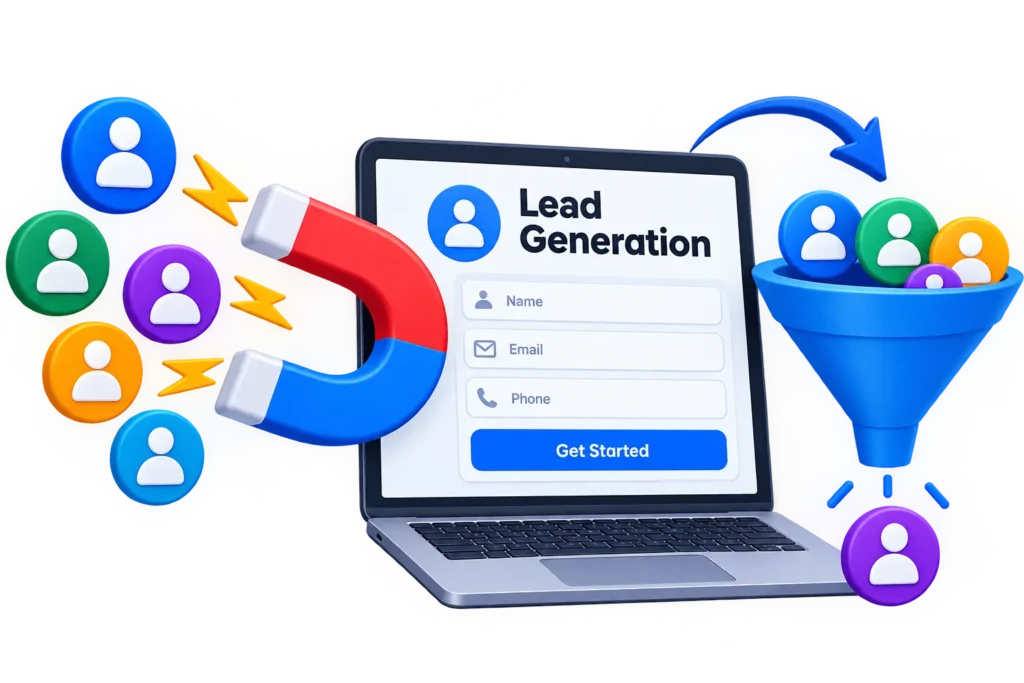
Lead generation is the process of generating consumer interest for a product or service with a goal of turning the interest into a sales. It is the process of attracting and capturing the interest of potential customers (leads) who are interested in your products or services. It involves encouraging visitors to share their contact information—such as their name, email address, or phone number—so that businesses can build relationships and eventually convert them into paying customers.
In digital marketing, lead generation is one of the most important goals because it helps businesses identify people who are genuinely interested in what they offer. Instead of marketing to everyone, businesses can focus their efforts on qualified prospects who are more likely to make a purchase.
Benefits of Lead Generation?
1. Increases Sales Opportunities
Generates potential customers who are interested in your products or services.
3. Improves Conversion Rates
Helps businesses focus on people who are more likely to become customers.
5. Reduces Customer Acquisition Cost
A well-planned lead generation strategy can bring customers more efficiently.
2. Builds a Customer Database
Collects useful information such as names, email addresses, and phone numbers.
4. Supports Targeted Marketing
Allows businesses to reach specific audiences based on their interests and needs.
6. Builds Long-Term Relationships
Leads can be nurtured through emails, content, offers, and follow-ups.
How Does Lead Generation Work?
1. Attract Visitors: Drive traffic through SEO, content marketing, social media, paid advertising, or email marketing.
2. Capture Information: Encourage visitors to fill out a form, subscribe to a newsletter, download a free resource, or register for an event.
3. Nurture Leads: Build trust by sending valuable content, personalized emails, and helpful information.
4. Convert Leads: Turn qualified leads into customers through follow-up communication, offers, or sales conversations.