Does Analytics required in Social Media Marketing? (2026)

Content
- What is Content Marketing?
- Importance of Content Marketing
- Types of Content Marketing
- Goal of Content Marketing
- Content Marketing better than Traditional Marketing?
- Benefits of Content Marketing
Does Analytics required in Social Media Marketing?
Yes — analytics is required for effective social media marketing, especially if the goal is growth, leads, sales or brand awareness.
But here’s the important distinction: you don’t need analytics to post on social media; you need analytics to know whether your marketing is actually working.
Why is analytics important in social media marketing?
1. Measure performance
You can track reach, impressions, engagement, clicks, followers, leads, and conversions.
2. Understand your audience
Analytics helps identify who engages with your content, when they are active, and what content they prefer.
3. Identify what content works
You can compare Reels, carousels, images, videos, and text posts to see what generates the best results.
4. Improve your strategy
Instead of guessing what to post, you can use actual data to make decisions.
5. Track ROI
For paid campaigns, analytics helps determine whether the money spent on ads is generating leads, sales, or other valuable actions.
6. Optimize posting time
If your audience consistently engages more at certain times, you can adjust your publishing schedule.
7. Find weak points
For example, if a post gets 50,000 impressions but only 20 clicks, your reach is good but your content or CTA may need improvement.
What Is Analytics in Social Media Marketing?
Social media analytics is the process of collecting, measuring, and analyzing data from social media platforms to understand how your content and campaigns are performing and how your audience is responding.
In simple words, social media analytics tells you what is working, what isn’t, and what you should improve.
Social media analytics is the process of collecting, measuring, and analyzing data from social media platforms to understand how your content, campaigns, and overall social media strategy are performing.
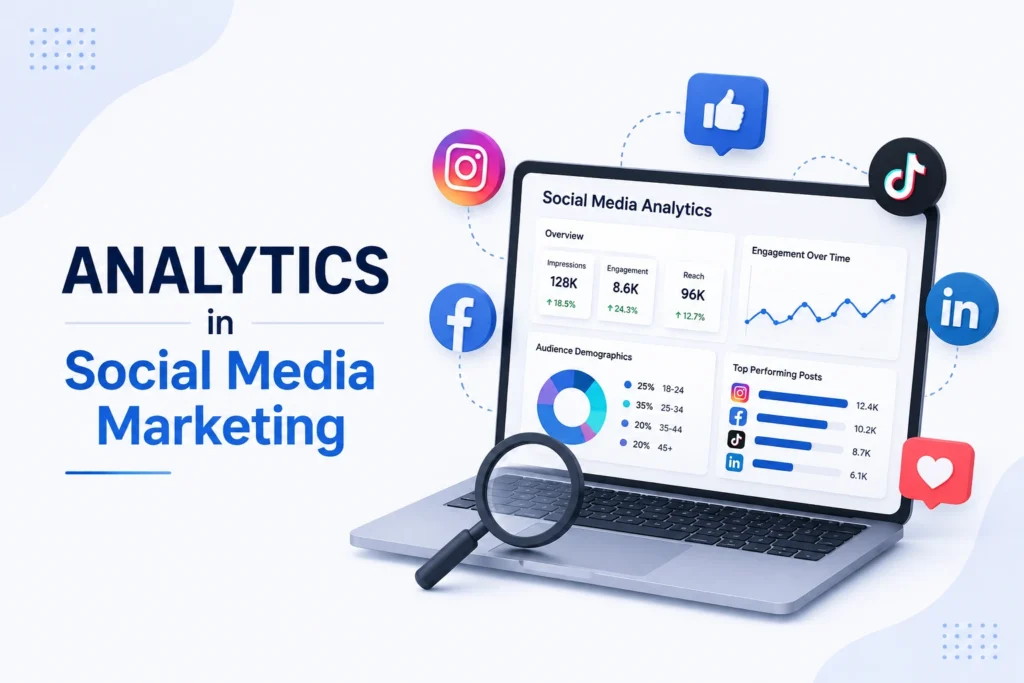
It helps marketers understand audience behavior, identify successful content, find areas for improvement, and make better decisions based on real data rather than assumptions.
Every time someone likes, comments, shares, saves, clicks a link, watches a video, or interacts with your social media content, it creates useful data. Social media analytics turns this data into meaningful insights that can help a business improve its marketing strategy.
For example, if a brand publishes different types of Instagram content, analytics can show which posts receive the highest engagement, which content drives the most website visits, and which posts generate leads or sales. Instead of simply assuming that a post performed well because it received many likes, marketers can look at multiple metrics to understand its actual business impact.
What does Social Media Analytics measure?
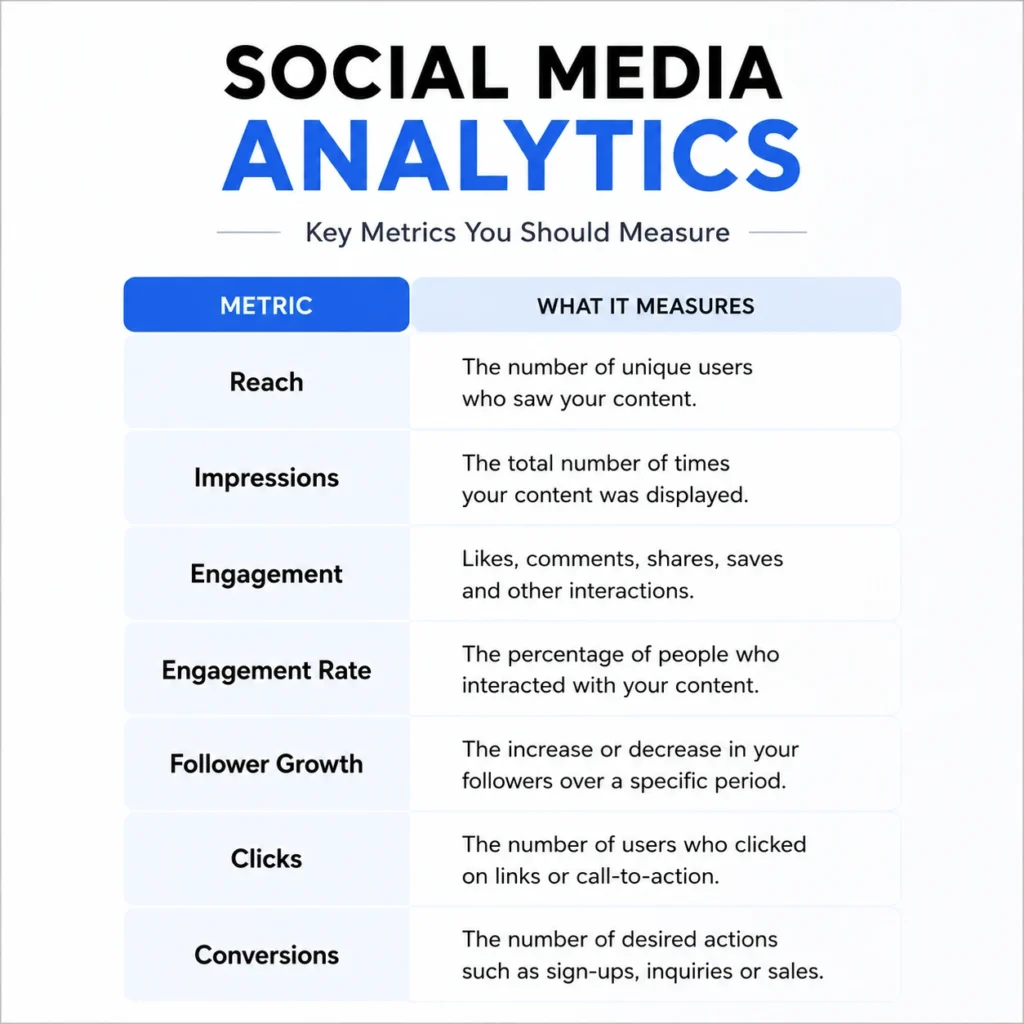
Some important social media metrics include:
- Reach: The number of unique users who saw your content.
- Impressions: The total number of times your content was displayed.
- Engagement: Likes, comments, shares, saves, and other interactions.
- Engagement Rate: The percentage of people who interact with your content compared with the number of people who saw it or your audience size.
- Follower Growth: How quickly your social media audience is increasing or decreasing.
- Clicks: The number of users who click on links, buttons, or calls to action.
- Conversions: Actions such as registrations, enquiries, purchases, or downloads generated through social media.
- ROI: The return a business receives from its social media marketing investment.
How Can Analytics Help Understand Social Media Audiences?
Analytics helps marketers understand who their audience is, what they are interested in, and how they interact with social media content. It provides useful information such as age, location, interests, active times, engagement behavior, and content preferences.
By analyzing this data, marketers can identify which type of content attracts their target audience and when they are most likely to engage. This helps businesses create more relevant content, improve audience targeting, and build a stronger social media strategy.
Which Tools Are Used for Social Media Analytics?
Several social media analytics tools help marketers track performance, understand audience behavior, and measure campaign results. Popular platforms include Instagram Insights, Facebook Insights, LinkedIn Analytics and YouTube Analytics.
For more advanced analysis, marketers can also use tools such as Google Analytics, Sprout Social, Hootsuite, and Buffer. These tools provide data on engagement, reach, traffic, conversions, audience growth, and other important metrics.