
5 Social Media Marketing
In Depth Information(2026)

Content
- What is Social Media Marketing?
- Importance of Social Media Marketing
- Benefits of Social Media Marketing
- Working process of Social Media Marketing
- Mistakes to Avoid
What is Social Media Marketing?
Social media marketing is the process of using online social platforms to promote a business, build brand awareness, connect with audiences and achieve specific business goals. Instead of relying only on advertisements, businesses create valuable content that informs, entertains, or inspires people while encouraging meaningful interactions.
A successful approach includes publishing engaging posts, responding to customer questions, sharing updates, running promotional campaigns, and analyzing performance to understand what works best. Whether the objective is increasing website traffic, generating leads, boosting sales, or improving customer relationships, a well-planned strategy helps businesses stay connected with their audience and remain competitive in today’s digital world.
Importance of Social Media Marketing?
Social media marketing is the process of using online social platforms to promote a business, build brand awareness, connect with audiences, and achieve specific business goals. Instead of relying only on advertisements, businesses create valuable content that informs, entertains, or inspires people while encouraging meaningful interactions.
A successful approach includes publishing engaging posts, responding to customer questions, sharing updates, running promotional campaigns, and analyzing performance to understand what works best. Whether the objective is increasing website traffic, generating leads, boosting sales, or improving customer relationships, a well-planned strategy helps businesses stay connected with their audience and remain competitive in today’s digital world.
Benefits of Social Media Marketing?
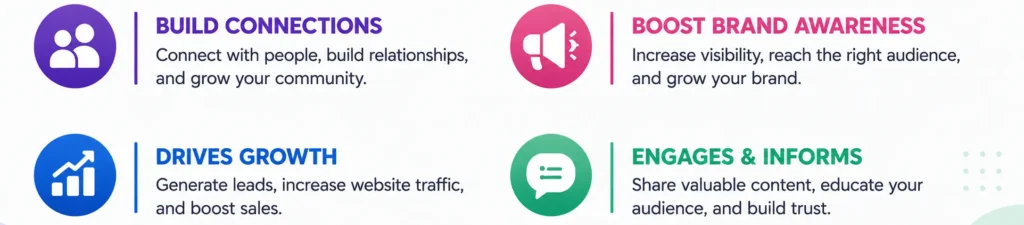
A strong presence on social platforms has become essential because customers spend a significant amount of time online discovering brands, researching products, and sharing experiences. Businesses that actively engage with their audience are more likely to build trust and remain memorable.
An effective social strategy helps companies reach potential customers, increase visibility, strengthen their reputation, and maintain ongoing communication with existing clients. It also provides valuable insights into customer preferences and behavior, allowing businesses to improve their products, services, and marketing efforts. Compared to many traditional advertising methods, it offers a cost-effective way to grow a brand and connect with a wider audience.
Using social platforms as part of a marketing strategy offers several long-term advantages for businesses of all sizes. It helps increase brand visibility, attract new customers, strengthen customer relationships, and improve overall online presence.
Additional benefits include generating qualified leads, driving more website traffic, improving customer support through direct communication, and building trust by consistently sharing valuable content. Businesses can also gather customer feedback, monitor market trends, and measure campaign performance in real time. These insights help organizations make better marketing decisions and achieve sustainable growth.
How Social Media Marketing Works?
This marketing approach works by creating and sharing content that attracts the right audience while encouraging interaction. Businesses first identify their target audience and define clear objectives, such as increasing brand awareness, generating leads, or driving website traffic.
After setting goals, they develop a content plan that includes educational posts, entertaining videos, product updates, customer stories, and promotional campaigns. As people engage through likes, comments, shares, and messages, businesses build stronger relationships with their audience. Performance is continuously monitored using analytics, allowing marketers to refine their strategy and improve future results
Common Mistakes to Avoid in Social Media Marketing?
Many businesses struggle because they post inconsistently, focus too heavily on promotions, or fail to understand their target audience. Publishing low-quality content, ignoring customer comments, and lacking a clear strategy can significantly reduce engagement and weaken brand credibility.
Other common mistakes include neglecting performance analysis, failing to adapt content based on audience feedback, and copying competitors instead of creating original content. Businesses should prioritize consistency, authenticity, valuable content, and continuous improvement. Regularly reviewing campaign performance and responding to audience needs helps build stronger relationships and achieve long-term success.